What Is a Stock Split?
A stock split sounds like a big corporate event, and the headlines often treat it that way. Mechanically, though, a split only changes how many shares exist and what each one costs. It does not change what the company is worth, or what your position is worth. This guide explains what actually happens, why companies do it, and why a reverse split is worth a second look. Nothing here is investment advice.
What a stock split does
A stock split divides each existing share into more shares. In a 2-for-1 split, every share becomes two and the price per share is cut in half. In a 10-for-1 split, every share becomes ten and the price drops to a tenth. If you held 10 shares at $300 before a 3-for-1 split, you hold 30 shares at $100 afterward. The position is worth $3,000 either way.
The key word is divides. A split slices the same pie into more pieces; it does not bake a bigger pie. The company's total market cap, which is share price times share count, is the same the instant after the split as the instant before.
Why companies split their stock
The usual reason is to keep the share price in a range that feels approachable. When a stock climbs into the hundreds or thousands of dollars per share, a split brings the headline price back down so a single share is easier to buy. It is largely about optics and accessibility rather than fundamentals.
There are a few practical knock-on effects. A lower share price can make standard 100-share options contracts cheaper to trade, and historically a split was sometimes read as a sign of management confidence, because companies tend to split after the price has already run up. That signal is soft, though. A split is a decision about the share count, not a statement about future earnings.
What a split does not change
This is where beginners most often get tripped up. A split is not a dividend and not free money. It changes nothing about value:
- Your position is worth the same dollar amount the moment before and after.
- The company's market cap is unchanged.
- Your ownership percentage of the company is unchanged.
Per-share figures simply rescale to match the new share count. A dividend quoted per share is adjusted proportionally, so the total payout you receive does not change because of the split. The same is true of historical chart prices, which brokers and data providers usually restate on a split-adjusted basis so the past does not appear to jump.
Reverse splits: the same move, in reverse
A reverse split runs the other way. A 1-for-10 reverse split combines every ten shares into one and multiplies the price tenfold: 100 shares at $0.50 become 10 shares at $5.00. As with a forward split, the value of the position does not change at the moment it happens.
What makes reverse splits worth a closer look is who tends to do them and why. They are common at struggling small companies trying to lift a sagging share price back above the $1.00 minimum bid that major exchanges require for continued listing. A company that has fallen toward delisting can use a reverse split to stay on the exchange. That is a mechanical fix to the share price, not evidence that the underlying business has improved.
A reverse split is not automatically a bad sign, and plenty of healthy funds and companies use them for ordinary housekeeping reasons. But when a penny stock does a reverse split to dodge a delisting and the promotion around it heats up at the same time, treat that combination with the same caution you would give any low-priced, thinly followed name.
How a split shows up in the data
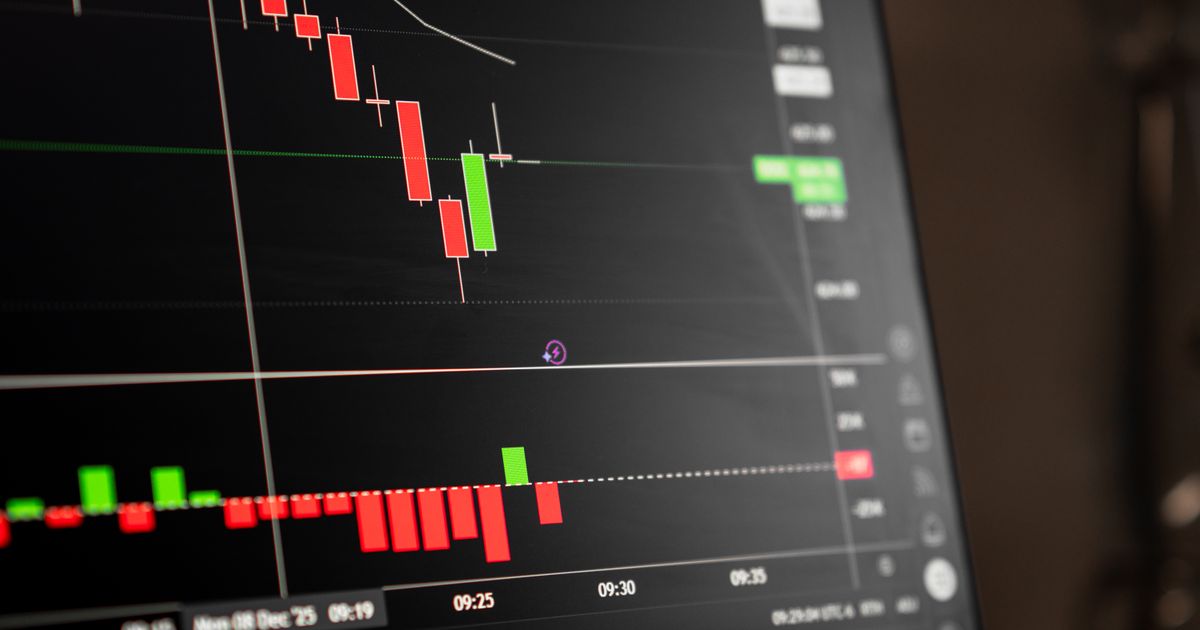
On a ticker page, a forward split typically appears as a sudden drop in the share price paired with a matching jump in the share count, with no real change in market cap. Because most charts are split-adjusted, the historical line usually stays smooth rather than showing an artificial cliff. If you ever see a price history that looks like it fell 50 percent overnight with no news, a split is a likely explanation worth ruling out before reading anything into the move.
Related reading
- Common Stock Market Myths, Fact-Checked: why a low share price does not mean a stock has more room to grow, a misconception splits often feed.
- What Is a Pump-and-Dump?: the promotion playbook that sometimes accompanies a low-priced stock after a reverse split.
- Glossary: plain-English definitions of stock split, market cap, dividend, and penny stock.
- Browse stocks by movers, price, and size to see how price and share data sit together on a ticker page.